


The Moment You Realize "Involved" and "Known" Are Two Very Different Things
You did everything the church website told you to do.
You filled out the connection card. You showed up to the newcomers' class. You signed up for the parking lot team because the lady at the welcome desk said it was "the fastest way to meet people." You brought banana bread to the potluck. Twice.
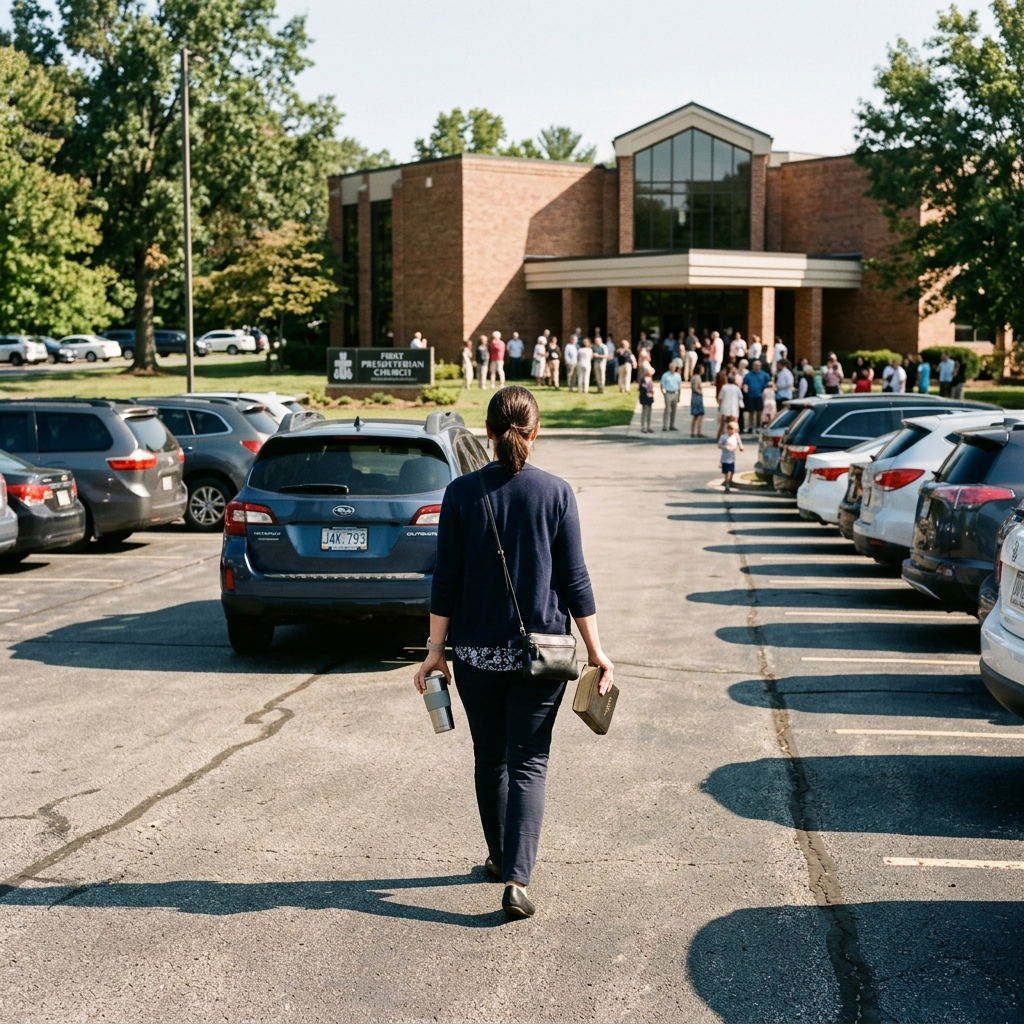
And then one Sunday, three months in, you're standing in the lobby holding your coffee like a prop, watching clusters of people laugh about something that happened at someone's house on Friday night — a Friday night you didn't know about — and it hits you:
You are fully plugged in and completely unknown.
I know this moment because I lived it. I was on the setup crew. I knew how to unlock the supply closet. I could tell you where they kept the extra communion cups. And I could not tell you the last name of a single person I served with.
If you're in that space right now — the space where you've done all the "right things" and still feel like a permanent guest — this one's for you.
Why "Getting Involved" Doesn't Automatically Mean "Getting Connected"
Here's the thing nobody at the welcome desk will tell you: activity is not the same as intimacy.
Churches are really, really good at getting you busy. Volunteer slots, Bible studies, committees, service projects, prayer teams — there's a sign-up sheet for everything. And they genuinely believe that if you just do enough things, community will magically happen.
Sometimes it does. But often what happens is this: you end up with a lot of shoulder-to-shoulder time (stacking chairs, passing out bulletins, setting up coffee) and almost zero face-to-face time (actual conversations where someone asks you a real question and waits for the answer).
You become a familiar stranger. People recognize your face but not your story.

And the cruel irony? The busier you get at church, the less emotional energy you have to pursue the deeper connections you came looking for in the first place.
The Friendship Timeline Nobody Warns You About
Research says it takes roughly 50 hours of interaction to move from acquaintance to casual friend, and 200 hours to become close friends. Two hundred hours. That's not a typo.
Now think about church math: you see people for maybe 90 minutes on Sunday. Even if you add a small group (another 90 minutes), you're looking at 3 hours a week. At that pace, "close friend" status is about 18 months away.
Eighteen. Months.
That's not a failure of your personality. That's just math. And nobody tells you this because the welcome team brochure says "You'll feel at home in no time!" and "no time" apparently means "a year and a half if everything goes perfectly."
So if you're four months in and wondering what's wrong with you — nothing is wrong with you. You're on schedule. A brutal, lonely, completely normal schedule.
The "Established Group" Problem
Here's another thing that's not your fault: most church friend groups formed years ago.
They went through a sermon series together in 2019. They survived the pandemic shutdown together. They watched each other's kids grow up. They have seven years of inside jokes and shared casserole recipes and that one story about the youth group trip to Branson that they will never let die.
You walking into that ecosystem is like transferring to a new school in junior year. Everyone is perfectly nice. Nobody is being mean. But the social architecture was built before you arrived, and there's no obvious door.
This is especially brutal if you're an introvert, because your brain is already whispering "See? They don't need you. You're extra. You're optional."
Your brain is wrong. But it's very convincing.
What Actually Works (and What Doesn't)
What doesn't work:
- Signing up for more activities (busyness ≠ belonging)
- Waiting for someone to notice you're lonely (they won't — you look "fine")
- Comparing your three-month experience to someone else's ten-year roots
What actually works:
- Pick one person, not a crowd. You don't need the whole church to know you. You need one person. Find someone who asks follow-up questions. Someone who remembers what you said last week. Invest there.
- Be the inviter. This is terrifying, I know. But "Hey, want to grab coffee after service?" is the most powerful sentence in church friendship. Most people are also waiting to be asked.
- Show up to the weird stuff. Not the main Sunday service — everybody goes to that. Show up to the Tuesday night prayer meeting with nine people. The Saturday morning service project. The mid-week Bible study in someone's living room. Small rooms build big friendships.
- Give it the 18 months. Set a real timeline. Tell yourself: "I will give this church 18 months of genuine effort before I evaluate." It takes the pressure off every single Sunday being a referendum on your belonging.
The Part Nobody Talks About — Including God in the Equation
Here's where I'm going to get honest in a way that might surprise you.
There's a verse in Ecclesiastes — "Two are better than one... if either of them falls down, one can help the other up. But pity anyone who falls and has no one to help them up." (Ecclesiastes 4:9-10)
We read that and think it's about having a buddy system. But what I think Solomon was really saying is this: loneliness is not a character flaw. It's a design feature.
You were made to need people. The ache you feel when you're surrounded by a hundred strangers singing the same song? That's not weakness. That's your soul doing exactly what it was built to do — reaching for connection.
And here's the part that's hard to hold but true: sometimes the season of being unknown is the season where God becomes the most known to you. When no one else sees you, there is a God who does. Not as a consolation prize — as a foundation. The kind of knowing that doesn't depend on someone remembering your name in the lobby.
That doesn't make the loneliness fake. It makes it survivable.
Your Assignment This Week
If you're in the "active but alone" season, here's your one thing:
Text one person from church something that isn't about church.
A meme. A restaurant recommendation. A "hey, how did that thing with your car turn out?" Something that says: I see you outside of Sunday.
That's it. That's the whole assignment. Because real friendship doesn't start in the sanctuary. It starts in the follow-up.
And if you're reading this and thinking "I don't even have anyone's number" — next Sunday, get one. Just one. That's the assignment before the assignment.
You're not invisible. You're just early. And early is not the same as unwelcome.