

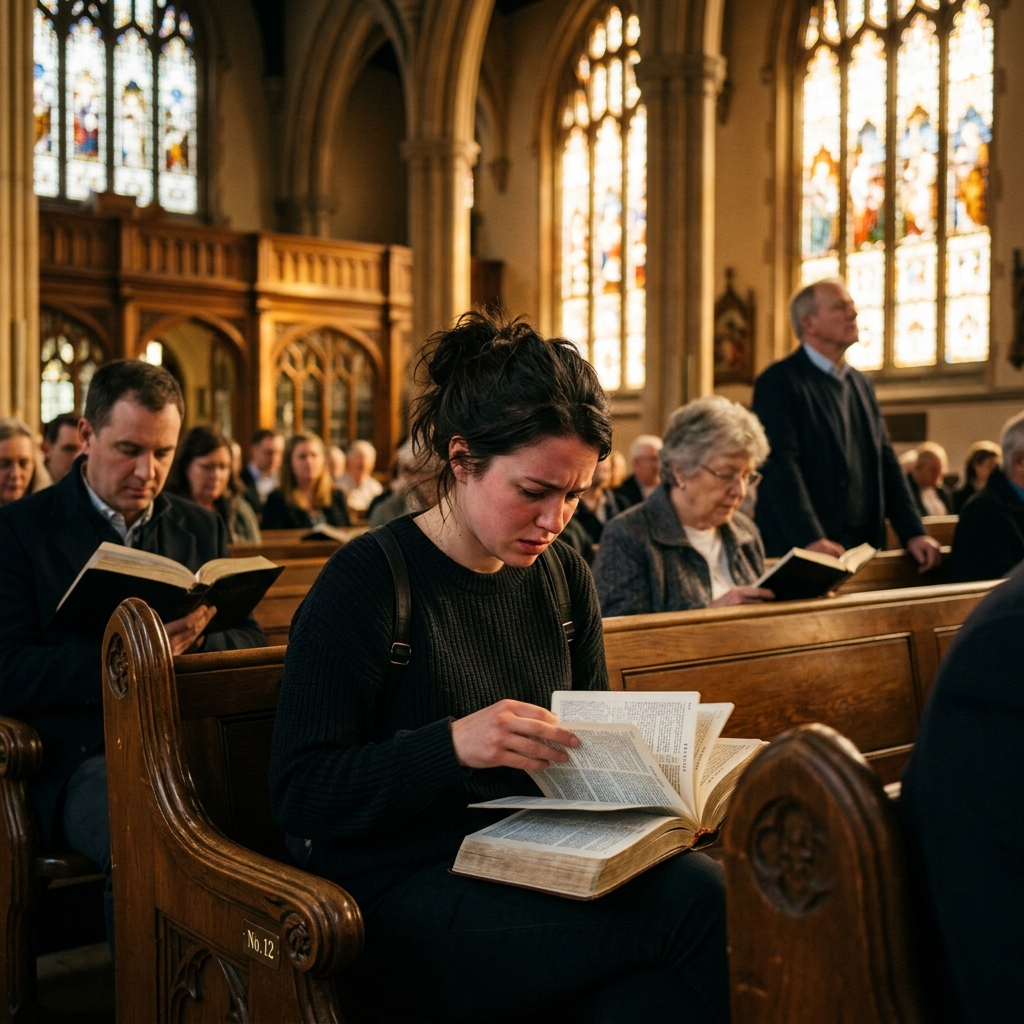
You were doing fine. Genuinely fine. You'd made it through the parking lot, survived the greeter, found a seat that was close enough to the exit to feel safe but far enough back that nobody would notice you during the "visitors stand up" segment (which, mercifully, didn't happen today). You even managed to clap on beat during the worship set. Things were going well.
Then the pastor smiled warmly, adjusted his glasses, and said the five words that turned your blood cold:
"If you'll turn to Habakkuk…"
And just like that, your brain entered full crisis mode. Habakkuk. Habakkuk? Is that… Old Testament? Is it a person? A place? Is it near Psalms? Is it near anything? You glance left. The woman next to you has already flipped to the exact page like she has GPS embedded in her thumbs. You glance right. The guy on the other side isn't even looking — he pulled it up on his phone in 0.3 seconds like some kind of Bible speed demon.
And there you are. Holding a Bible that might as well be a 1,200-page mystery novel, flipping past what you're pretty sure is Leviticus, wondering if Habakkuk is before or after Obadiah — a book you also didn't know existed until this exact moment.
The Flip of Shame
Here's what nobody tells you about this moment: the sound of flipping pages in a quiet sanctuary is deafening. Every single page you turn sounds like a cymbal crash in your head. And the longer it takes, the more obvious it becomes that you, specifically, have no idea what you're doing.
So you improvise. You stop flipping and just… stare at whatever page you landed on. It's the book of Numbers. You don't know what Numbers is about, but you're committed now. You nod along as the pastor reads from Habakkuk, pretending you're following along in Numbers chapter 14, which — for the record — is about the Israelites complaining in the wilderness, which honestly feels very relatable right now.
Meanwhile, your internal monologue is running a full Wikipedia search: How many books are in the Bible? 66? Who decided on 66? Why couldn't they have organized this alphabetically? Would it have killed someone to add tabs?
The Survival Guide: How to Find Anything in the Bible Without Having a Spiritual Crisis
Look, I've been there. I once spent an entire sermon in the book of Joel thinking I was in the book of John. (To be fair, they start with the same two letters and Joel is tiny.) So here's the cheat sheet I wish someone had handed me at the door:
1. The Table of Contents Is Not Cheating.
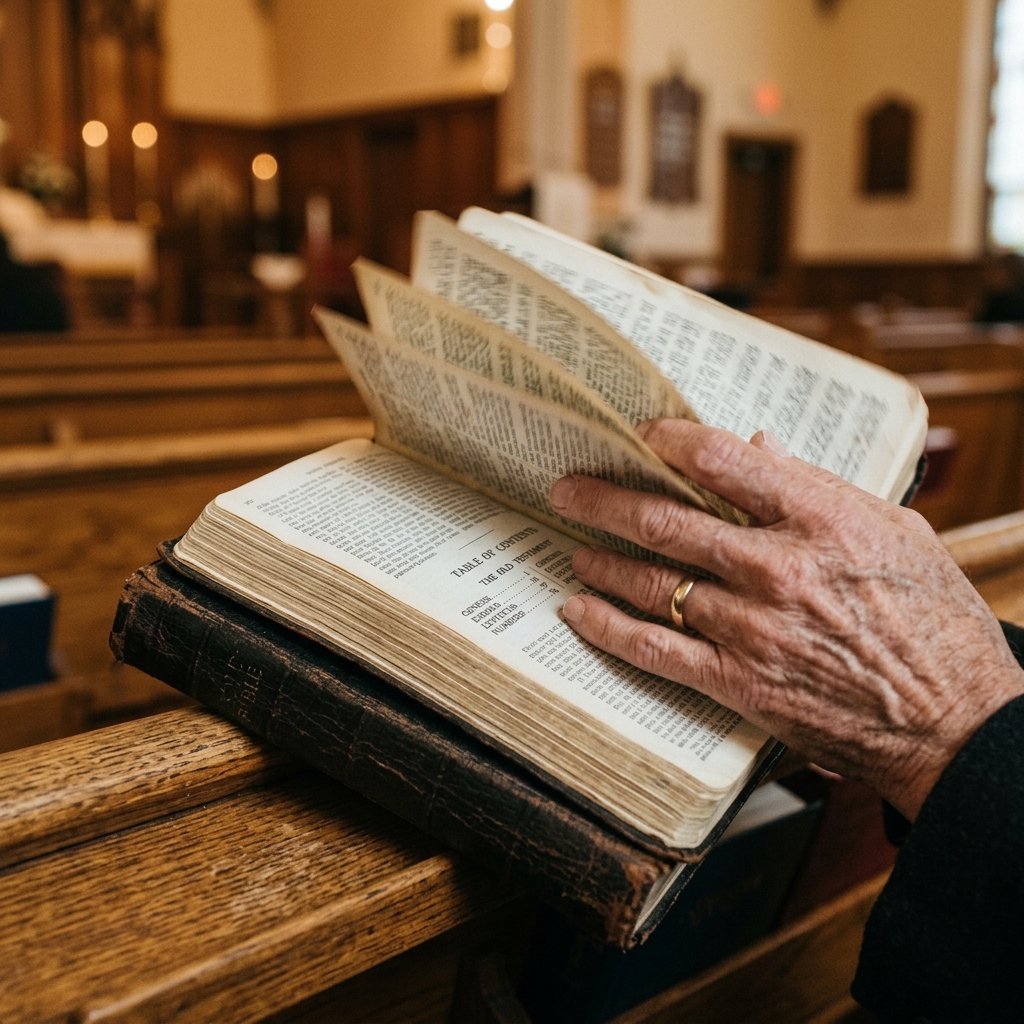
I know, I know — it feels like using the answer key during a test. But here's the truth: the table of contents exists because even lifelong churchgoers use it for the obscure books. (Nobody is flipping straight to Zephaniah from muscle memory. Nobody.) Open it. Use it. No one is watching. And if they are, they're probably just impressed you brought a Bible.
2. Learn the Landmarks, Not the Whole Map.
You don't need to memorize all 66 books. You need three landmarks:
- Psalms is in the middle. If you open the Bible roughly to the center, you'll hit Psalms almost every time. It's the equator of the Bible.
- Matthew starts the New Testament. The New Testament is the back quarter of the Bible. If the pastor says anything from Matthew through Revelation, flip to the back 25%.
- Genesis is first. Revelation is last. If you know those two, you know the bookends, and everything else is just… somewhere in between.
3. The Phone Is Your Secret Weapon.
Bible apps exist for a reason, and that reason is people like us. Download YouVersion or the ESV app before you go. When the pastor says "Habakkuk 3:17," you just type it in the search bar and boom — you're there before the speed-flipper next to you. Some people might judge you for being on your phone during church, but they'll get over it when they realize you're reading Scripture and not checking fantasy football scores.
4. Just Ask the Person Next to You.
This is the move that terrifies people but almost always works. A simple whisper of "Hey, what page is that on?" will almost certainly be met with a warm smile and a pointed finger. Church people love helping with this. It makes them feel useful. You're practically doing them a favor.
5. The "Confident Nod" Technique.
If all else fails, don't flip. Just close the Bible gently, fold your hands on top of it, and listen. Most sermons are projected on a screen anyway. You can follow along without finding the page. The Confident Nod — where you look thoughtful, nod slowly, and occasionally say "mmm" — will carry you through any scripture reading. It's the spiritual equivalent of pretending you read the email before the meeting.
Why This Matters More Than You Think
Here's the thing I didn't realize until years later: the embarrassment of not knowing where Habakkuk is? It's not really about the Bible. It's about the fear that you don't belong. That everyone else got a manual you didn't get. That you showed up to the party and everyone else knows the dress code, the inside jokes, and the secret handshake, and you're just standing there in the wrong outfit, laughing two seconds too late.
But here's what I've come to understand — and it took me way too long to get here: nobody in that room was born knowing the books of the Bible. Every single person who flipped straight to Habakkuk once had a Sunday where they were stuck in Numbers wondering what was happening. They just had more Sundays.
There's a moment in Psalm 119 where David writes, "Your word is a lamp for my feet, a light on my path." And I love that image because lamps don't light up the whole road. They light up the next step. You don't have to know the whole Bible to take the next step. You just have to be willing to keep showing up — even when you can't find Habakkuk, even when you're embarrassed, even when you feel like the only person in the room who doesn't have it figured out.
Spoiler: you're not the only one.
Your Assignment This Week
Before your next church visit, try this: open a Bible (or a Bible app) and just look at the table of contents. That's it. Don't study it. Don't memorize it. Just scan the list of books and get a feel for the neighborhood. Notice that the Old Testament is long and the New Testament is shorter. Notice that Psalms really is in the middle. Notice that Habakkuk is near the end of the Old Testament (it's the 35th book — now you'll never forget).
That two-minute scan is the difference between panic and peace next Sunday.
And if you do get caught flipping to the table of contents during the sermon? Own it. Smile. The person next to you probably wishes they had the guts to do the same thing.