

It's 9:42 AM. You've successfully snuck into the back row, avoided the over-caffeinated greeting team at the front door, and found a comfortable pocket of anonymity. But just as you start to relax and scan the bulletin, the pastor closes his binder, smiles warmly at the congregation, and says the most terrifying sentence in the modern liturgy: "And now, let us pass the peace of Christ."
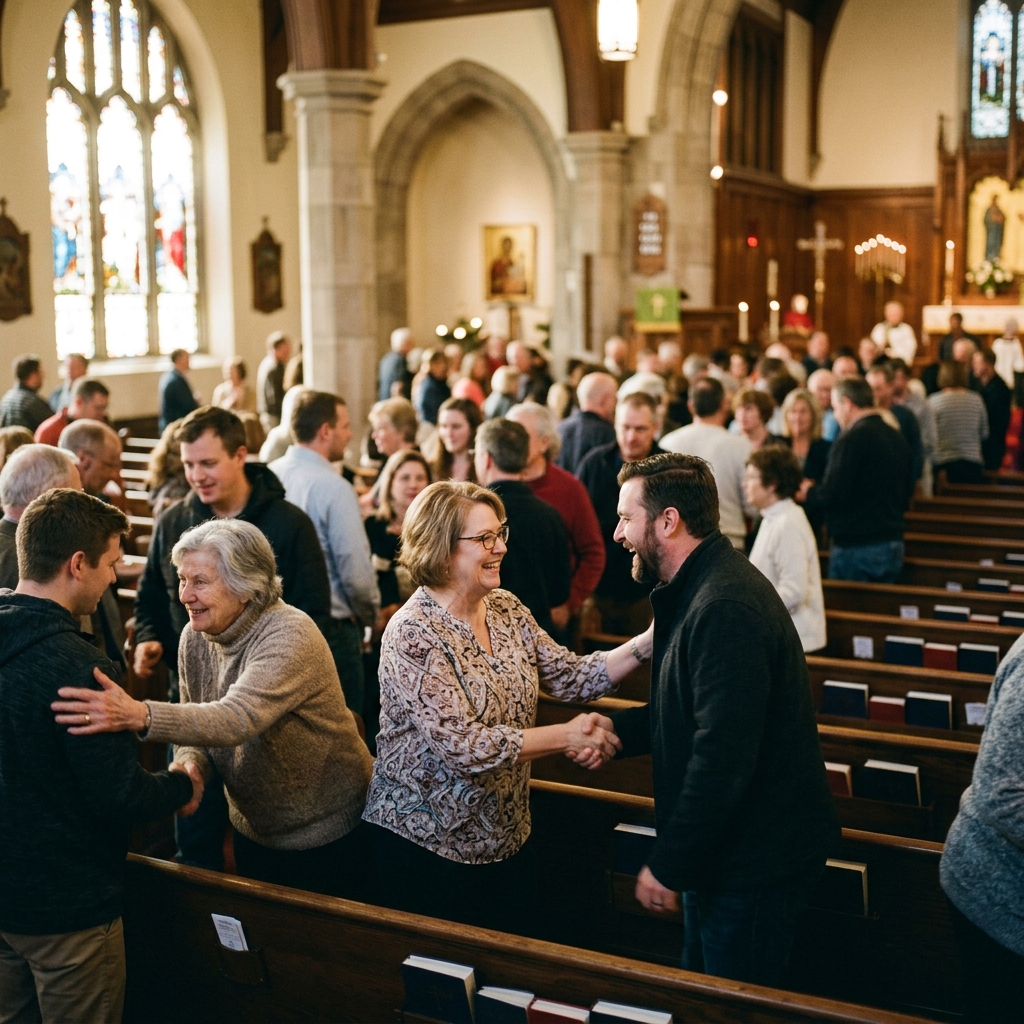
Instantly, the quiet sanctuary transforms into a high-stakes, 360-degree speed-dating round. Pews shift. People turn. And a man named Gary—who you've never met but who is radiating intense extrovert energy—is already lunging across the aisle with an outstretched hand, a booming voice, and an eye-contact lock that would make a staring contest champion sweat.
For some, this is the highlight of the service. It's a chance to catch up, swap handshakes, and hand out side-hugs. But for the introvert, the socially anxious visitor, or the germ-conscious guest, the "Passing of the Peace" feels less like a holy ritual and more like a mid-service gauntlet of social pressure.
If you've ever stood in a pew during greeting time wondering if you can fake a sudden drop-off in your phone reception to avoid shaking hands, this guide is for you. Let's talk about why the greeting time triggers such intense panic, and how you can navigate the pew boundary battle without losing your peace.
The Survival Guide
Here is the first unwritten rule of the sanctuary: you are not required to surrender your personal space boundaries to participate in worship. If you want to share the peace without feeling cornered, here is your tactical survival plan:
Strategy 1: The Pew Fortress (Stay in Your Safe Zone)
The most common mistake visitors make is wandering out into the aisles. Once you step into the aisle, you are in open territory and fair game for the handshakers. Treat your pew as a fortress. Keep your feet firmly planted between the wooden benches. You can warmly acknowledge people around you without leaving your safe zone.
Strategy 2: The Tactical Nod & Wave
You do not have to shake hands. If you prefer to avoid physical contact—whether due to germs, sensory overload, or simple preference—opt for the warm nod and wave. Place your hands lightly on the back of the pew in front of you (which physically signals that your hands are occupied) and offer a friendly wave or a two-finger peace sign accompanied by a smile. It is warm, polite, and sets a clear, non-verbal boundary.
Strategy 3: Memorize the Liturgical Script
One source of anxiety is not knowing what to say. Liturgical churches have a standard script. If someone approaches you and says, "Peace be with you," the correct response is: "And also with you." That's it. It's a complete transaction. You don't need to ask about their job, introduce your entire family, or explain your theological views on infant baptism. Say the line, smile, and pivot back to your bulletin.
Strategy 4: The Bulletin Shuffle
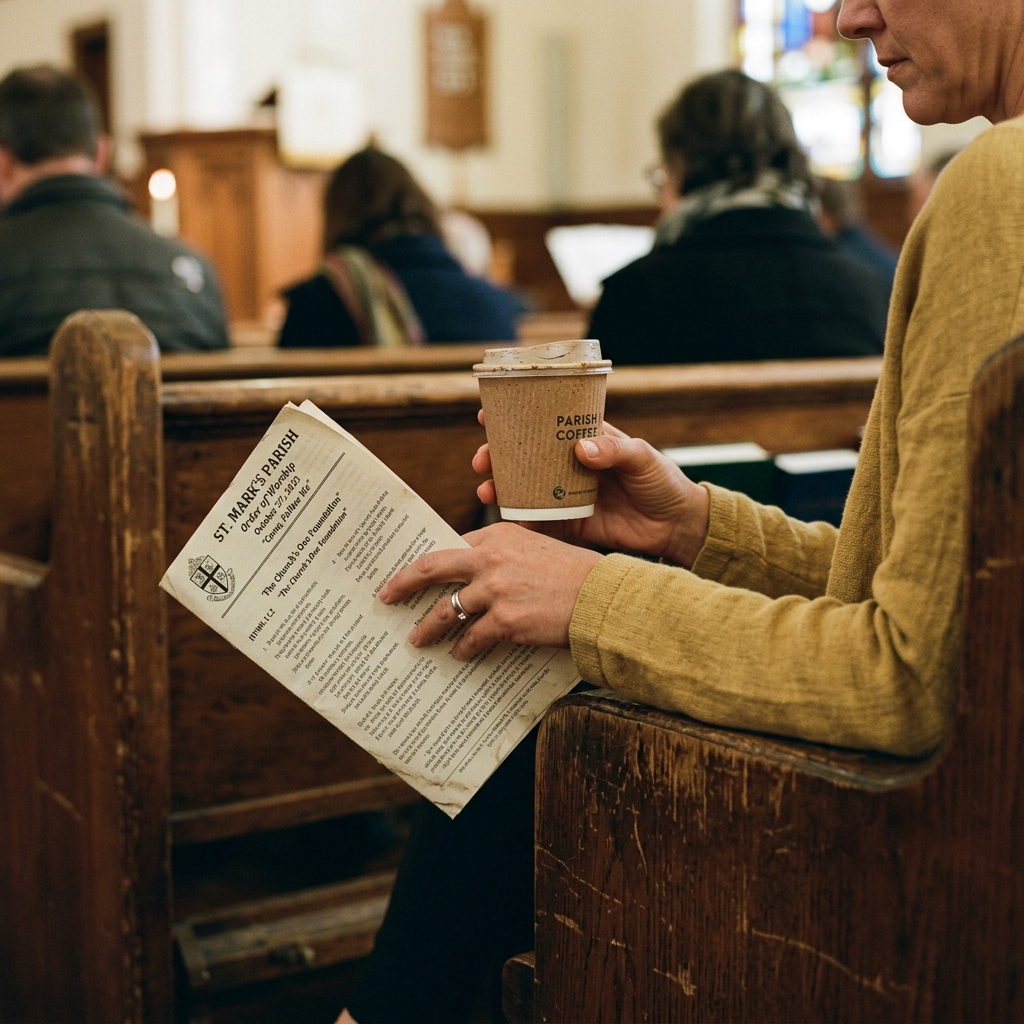
If the social pressure is mounting and you feel a wave of panic, use the bulletin shuffle. Look down at your bulletin or hymnal with deep, academic intensity. Flip a page. Adjust your seat cushion. Most churchgoers are respectful of someone who appears focused or in deep reflection, giving you a quiet shield during the loudest minutes of the service.
The Pivot
Here is what I've been reflecting on: why does a moment meant for "peace" cause so much internal friction?
It's because we've turned a theological reality into a social performance. We worry that if we don't shake enough hands, or if we look awkward standing in the row, we are failing at community. We mistake extroversion for holiness.
But the original purpose of "Passing the Peace" wasn't to act as a social mixer. In the early church, it was a radical moment of reconciliation. Before taking communion, the congregation would pause to resolve conflicts and make peace with one another. It was a physical representation of Christ's words in the Sermon on the Mount: "First go and be reconciled to them; then come and offer your gift."
The peace of Christ isn't about how charismatic or outgoing you are in the foyer. It's a gift that was bought for us, established when we were still strangers. Christ didn't wait for us to have our social game face on before offering us peace; He met us in our quiet, awkward, and messy realities.
The Landing
This Sunday, if you find yourself at a new church, remember this assignment:
Give yourself permission to pass the peace on your own terms. Rest your hands on the pew, make friendly eye contact, and offer a quiet wave or a sincere "peace be with you" to your immediate neighbor. You don't have to win the room or shake fifty hands to be a part of the body of Christ.
The peace of Christ is already yours. Protect your boundaries, breathe deep, and let Gary do the running around.
Now go find a comfortable row and enjoy the rest of the service.