


The Ghost Phase Is Over
The first visit was perfect. Not perfect perfect — you still white-knuckled the steering wheel in the parking lot for four minutes, walked in seven seconds after the music started so nobody would try to talk to you, and sat in the back row like you were casing the joint. But it was manageable perfect. Because nobody knew you. You were invisible. You were a ghost in a polo shirt, drifting through someone else's Sunday morning, and you could leave without anyone noticing.
It was beautiful.
And now you've ruined it by going back.
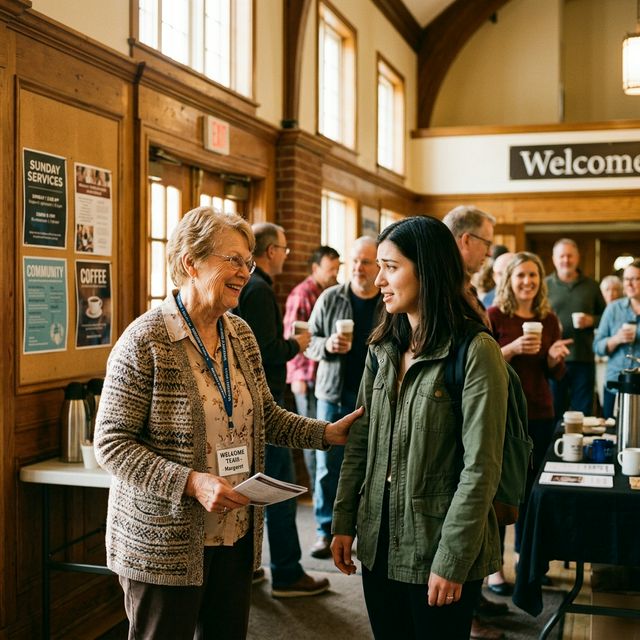
Because the second you walk through those doors a second time, a greeter — possibly the same greeter — tilts their head, squints slightly, and says the five words that end your anonymity forever: "Hey! You came back!"
And just like that, you're not a ghost anymore. You're a returning visitor. You're on the radar. You've been noticed, and the social contract has shifted underneath you like a rug on a hardwood floor.
Welcome to the Second Visit Trap.
Why the Second Visit Is Actually the Hardest One
Nobody tells you this. Every church search article, every "How to Find a Church" listicle, every well-meaning friend — they all focus on the first visit. "Just get through the door!" they say. "The hardest part is showing up!"
Respectfully: no.
The hardest part is showing up again. Because the first visit has no expectations. You're auditioning the church. You're the judge, not the contestant. You can sit, observe, rate the coffee, quietly evaluate the sermon like you're grading a TED Talk, and walk out without owing anyone anything.
The second visit flips the script. Suddenly you're the one being evaluated. Or at least, that's what your brain tells you. Your anxiety translates "Hey, you came back!" into: "We've been tracking you. You've expressed interest. The onboarding process has begun. Please report to the small group intake desk."
It's not rational. But anxiety rarely files its paperwork correctly.
The Five Stages of Second-Visit Panic
Let me walk you through what actually happens in your brain during that second visit, because I've lived every single one of these stages.
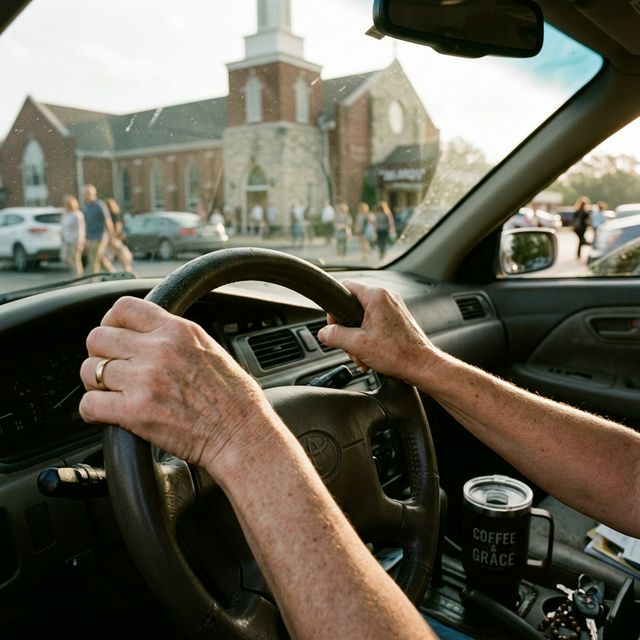
Stage 1: The Parking Lot Debate. You're in the car. You're early. You're having a full internal argument about whether you should go in or just drive to Panera instead. "I already went once," you tell yourself. "That counts. I'm basically a member."
Stage 2: The Recognition Flinch. You walk in. Someone smiles at you. Not a polite "welcome, stranger" smile — a knowing smile. A "you look familiar" smile. Your fight-or-flight activates. You consider pretending you're someone else's twin.
Stage 3: The Name Drop. Someone remembers your name. How do they remember your name? You told one person your name one time and now it's in some kind of ecclesiastical database? You didn't sign up for this. You gave your name, not your social security number.
Stage 4: The Invitation Escalation. Last week's conversation was "Welcome! The coffee's over there." This week it's "We have a newcomers' lunch next Sunday — you should come!" Your brain hears: "The net is closing. They want your Sundays. All of them."
Stage 5: The Internal Negotiation. You spend the entire sermon wondering if you can leave through a side door. You can. You've already identified three exits. You have a plan.
What's Actually Happening (Spoiler: They're Just Being Nice)
Here's the part where I level with you, because you deserve honesty more than you deserve validation.
They're not tracking you. That greeter who remembered your name? She remembers everybody's name. It's her spiritual gift and also slightly terrifying, but it's not surveillance. It's a sixty-three-year-old named Donna who genuinely lights up when she sees someone come back, because most people don't.
Here's a number that might reframe things: according to church growth research, only about 15-20% of first-time visitors ever return for a second visit. That means Donna has watched four out of five new faces disappear into the ether. When you walked back in? You made her whole week. That's not a trap. That's a human being who's happy you exist.
The invitation isn't a summons. When someone says "We have a newcomers' lunch," they're not issuing a subpoena. They're offering an option. You can say "Thanks, I'll think about it" — which is universal human code for "I will not be attending" — and they will survive. Churches have heard "I'll think about it" more times than they've heard the doxology. They know what it means. It's fine.
Being remembered isn't the same as being obligated. This is the big one. Your brain equates recognition with commitment, because in most social contexts, that's how it works — if a coworker remembers you, you have to make small talk forever. But church isn't a networking event. Being known doesn't mean you've signed a contract. It means one more person in the world will notice if you're not okay. That's not a liability. That's kind of the point.
The Real Thing That's Happening Under the Hood
Can I get honest for a second? Not church-article honest. Actually honest.
The Second Visit Trap isn't really about greeters or invitations or Donna's superhuman name-recall abilities. It's about something much deeper: the fear of being known.
Because anonymity isn't just comfortable — it's safe. When nobody knows you, nobody can disappoint you, and you can't disappoint them. You can attend, observe, and leave with your emotional armor fully intact. No risk, no vulnerability, no chance of someone seeing the version of you that isn't pulled together.
But here's what I keep bumping into, both in my own church search and in the conversations I read online from people in the thick of it: the thing you're afraid of is the thing you're actually looking for.
You didn't start this church search because you wanted to sit in the back row of an anonymous building every week. You started it because something in you is looking for community — real, messy, inconvenient community where people know your name and notice when you're gone and invite you to lunches you don't want to attend but are secretly glad you were asked to.
There's this moment in Genesis where God looks at Adam — who has literally everything: paradise, purpose, a direct line to the Creator of the universe — and says, "It is not good for the man to be alone." Not dangerous to be alone. Not sinful to be alone. Not good. As in: this is not how you were designed to function. You were built for being known.
The Second Visit Trap isn't a trap. It's a threshold.
Your Survival Kit for Visit Number Two
Okay. Spiritual truth delivered. Now let me give you the practical game plan, because epiphanies don't help if you're still hyperventilating in the parking lot.
1. Set a time limit. Tell yourself: "I will stay for exactly one hour." Having an exit plan reduces anxiety by roughly 400% (that's not a real statistic, but it feels right). When the hour is up, you can leave. No guilt. You showed up. That's enough.
2. Have your "out" phrases ready. When someone invites you to something and you're not ready, you don't have to explain your entire emotional landscape. Try: "That sounds great — I'm still getting my bearings, but I appreciate it." It's warm, honest, and buys you infinite time.
3. Sit in the same spot. This sounds counterintuitive — won't that make you more recognizable? Yes. But it also gives you a home base. You know where the exits are. You know who sits near you. Familiarity breeds calm, and calm is the whole objective right now.
4. Bring a friend or your phone. Having someone next to you — even if it's your spouse scrolling Instagram during the offering — gives you a social buffer. If a greeter approaches, you can turn to your companion and pretend to be mid-conversation. Is this mature? No. Does it work? Absolutely.
5. Remember: they cannot actually make you do anything. No one is going to physically escort you to a small group. No one is going to put you on a roster. The worst thing that happens on a second visit is that someone is nice to you twice. You can handle that.
Your One Thing This Week
If you visited a church and haven't gone back because the thought of being recognized makes your palms sweat — here's your assignment: go back. Just one more time.
Not because the church needs you to. Not because Donna is waiting. Not because God is keeping attendance.
Go back because on the other side of that recognition flinch is something you've been looking for longer than you want to admit. Connection. Belonging. A place where someone says your name and means it.
The first visit takes courage. The second visit takes trust. And trust — real, awkward, sweaty-palmed trust — is how every good thing starts.