

The Moment You Regret Writing Your Real Phone Number
You had a good Sunday. Like, genuinely good. The parking lot wasn't terrifying. The greeter didn't hug you. The sermon was solid. You thought, "You know what? Maybe I'll come back."
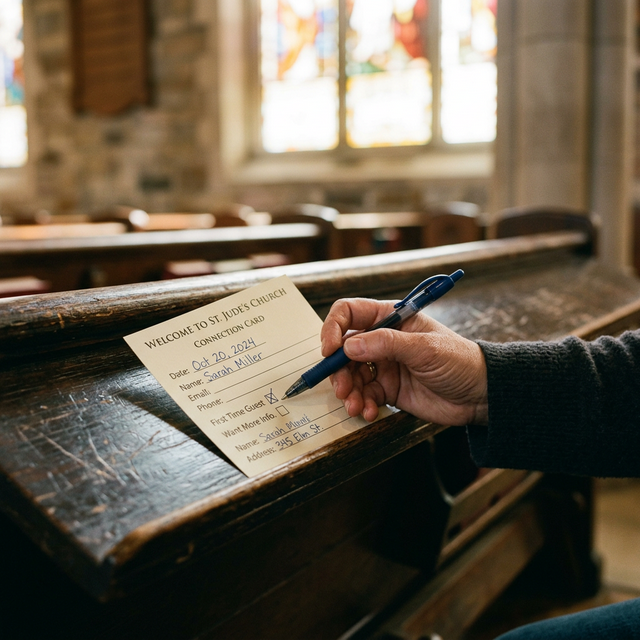
Then, on your way out, someone handed you a little card. A visitor card. Or a "connection card." Or a "We'd Love to Get to Know You" card. It seemed harmless. Name, email, phone number, maybe a box to check that says "I'm interested in learning more."
You filled it out because you were feeling that post-sermon warmth. You dropped it in the little basket. You drove home. You felt good about it.
That was your last moment of peace.
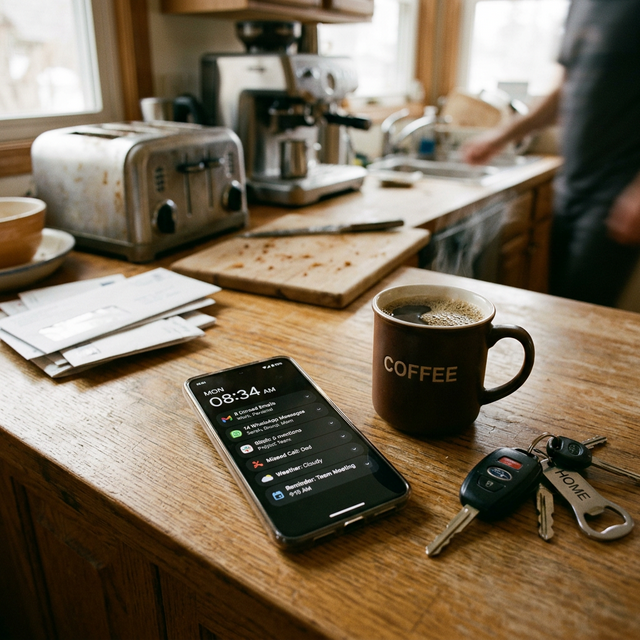
By Monday morning, you had a text from "Pastor Mike," an email from the "connections team," a second email inviting you to a newcomers' lunch, and a voicemail from someone named Brenda who just wanted to "check in and see how your visit was." By Wednesday, there was a follow-up text asking if you'd signed up for the newcomers' lunch yet. By Friday, another email — this one with a link to a spiritual gifts assessment.
You went to church once. You didn't apply for a mortgage.
Why Churches Follow Up Like Your Ex
Here's the thing: churches aren't trying to be weird. (Usually.) There's actually solid research behind the follow-up frenzy. Church leadership books and conferences teach that the first 48 hours after a first visit are the most critical window for connecting with a newcomer. If a church doesn't reach out quickly, the thinking goes, the visitor will forget about them and never come back.
So what happens is: churches build these elaborate "follow-up systems" — automated email sequences, volunteer call lists, text message templates — all designed to make sure you know you're wanted.
The intention? "We don't want anyone to slip through the cracks."
The execution? "Why is this church texting me more than my own mother?"
It's the church equivalent of a first date where the person texts you seven times before you've even gotten home. The energy is enthusiasm. The effect is panic.
A Field Guide to the Follow-Up Species
Not all church follow-ups are created equal. Here's what you might encounter after dropping that innocent little card in the basket:
The Polished Automator: You get a slick, branded email that was clearly written by a marketing team. Subject line: "So Glad You Joined Us! 🎉" It includes links to the sermon recap, a newcomers' event, a small group finder, and a donation page. It was sent 47 seconds after you left the building. This church has a system.
The Eager Texter: A real human (probably a volunteer) texts you from their personal phone. "Hey! This is Josh from Grace Community! So glad you came yesterday! Would love to grab coffee sometime!" Josh seems nice. Josh is also texting at 7:30 AM on a Monday. Josh, please.
The Voicemail Phantom: Someone calls you — and leaves a voicemail. In 2026. A voicemail. You don't listen to it because nobody under 50 listens to voicemails, but you feel vaguely guilty about it for three days.
The Multi-Channel Blitz: You get a text AND an email AND a handwritten postcard AND a follow-up call. All in the same week. From different people. Who apparently don't know the others already reached out. This isn't follow-up. This is a coordinated campaign.
The Ghost: You filled out the card, dropped it in the basket, and… nothing. No email, no text, no call. Radio silence. Somehow this is also anxiety-inducing. "Did they not get it? Do they not want me? Was I not visitor-card-worthy?"
The Survival Guide: How to Handle the Follow-Up Without Losing It
Alright, here's your game plan. Because the follow-up will come, and you deserve a strategy that doesn't involve changing your phone number.
1. You don't have to fill out the card. Full stop. I know it feels like you're being rude, but leaving your contact info is optional. If you're still in "just looking" mode, it's perfectly fine to skip the card entirely or fill out just your first name and email. You can always give them more info later when you're ready. Nobody's grading your card completion rate.
2. Use your secondary email. You know, the one you use for online shopping and newsletters? That one. This isn't deceptive — it's boundary-setting. You can check it when you're ready, at your own pace, without church emails competing with your work inbox for attention.
3. Respond once, on your terms. If someone texts or calls you and you want to respond, a simple reply goes a long way: "Thanks for reaching out! I had a great visit. I'm taking my time checking things out but I'll definitely reach out if I have questions." That one message does three things: it's warm, it sets a boundary, and it stops the follow-up chain. Most churches will respect it.
4. Don't feel guilty about not responding. You're allowed to not answer. You didn't sign a contract. If a church is so aggressive with follow-up that you feel harassed, that's actually useful information. A church that can't respect your silence probably won't respect your boundaries in other areas either.
5. Notice HOW they follow up — it tells you everything. This is actually one of the best church evaluation tools nobody talks about. A church's follow-up style is a mirror of their culture:
— Warm but not pushy? Good sign. They care but respect your pace.
— Aggressive and relentless? Might be a high-pressure culture across the board.
— Personal and specific? ("We noticed you mentioned you just moved — here's a list of local resources!") That's a church that was actually listening.
— Generic and automated? Not necessarily bad, but don't mistake a system for genuine interest.
The Part Nobody Says Out Loud
Here's what I keep coming back to: the follow-up bombardment is so uncomfortable because it touches the same nerve as the church search itself. We want to be seen, but we don't want to be hunted.
There's a massive difference between a church that says "We noticed you, and we're here when you're ready" and a church that says "We noticed you, and we will not stop until you're enrolled in three programs and tithing."
Jesus had a thing about this, actually. He invited people. "Come and see." "Follow me." He didn't send twelve automated emails. He didn't leave voicemails. He extended the invitation and then let people choose. The ones who came, came because they wanted to — not because they were guilt-tripped into it by a persistent fisherman named Peter.
A good church follow-up should feel like an open door. Not a closing one.

The Landing
Here's your assignment for this week: the next time you visit a church, fill out the card with only what you're comfortable sharing. First name and email is plenty. And then pay attention to what happens next.
If they follow up with warmth and give you space? Put a star next to that church's name. If they follow up like they're tracking a FedEx package? That's data you can use.
And if you're sitting there right now with an inbox full of church emails you haven't opened and a guilt knot in your stomach about it — let it go. You didn't do anything wrong. You went to church on a Sunday, and that was brave enough.
You're not a lead to be converted. You're a person trying to find a home. And the right church will know the difference.