

The Moment You Realize You've Made an Enemy
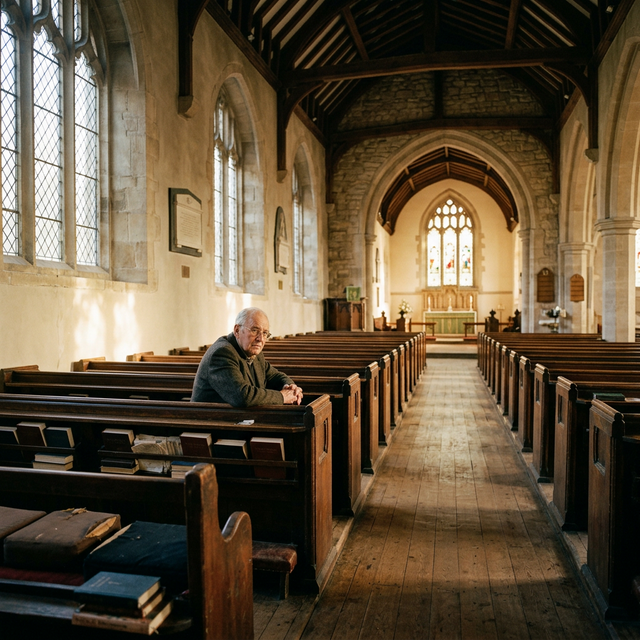
You walked in early. You found a pew. You sat down. You even put your jacket on the spot next to you like a civilized person staking reasonable territory. You were feeling good about this whole church visit thing.
Then a woman in her sixties appeared at the end of your row. She didn't say hello. She didn't smile. She just looked at you — at your spot — with the kind of quiet devastation usually reserved for someone who's just discovered their parking spot has been stolen at Costco on a Saturday.
"Oh," she said. Just oh. But it was not a casual oh. It was an oh that contained multitudes. It was an oh that said, I have sat in this exact spot every Sunday for nineteen years and you, a stranger, have committed a crime you don't even know exists.
Welcome to church. You're in someone's seat.
The Unwritten Seating Chart Nobody Warned You About
Here's something that won't be on any church website, any "What to Expect" page, or any welcome brochure: most churches have an invisible seating chart, and every regular knows exactly where they sit.
This isn't an official policy. No usher is going to hand you a seating assignment. There's no velvet rope. But make no mistake — that third pew from the back on the right side? That's been the Hendersons' spot since 2004. The aisle seat in row seven? That's where Frank sits so he can get to the coffee station during the closing prayer. The back-left corner with the slightly obstructed view of the stage? That's introvert territory. It has occupants.
And you, brand new visitor who just wanted to sit somewhere quiet and not be noticed, have unknowingly wandered into someone's Sunday morning real estate.
One person on Reddit described sitting down in a new church only to have a woman tap them on the shoulder and say, "My friends always sit in the rows right in front of me." Not "hello." Not "welcome." Just: you are in the wrong rows, plural. Another described getting "the look" — that tight-lipped, eyes-narrowed expression that communicates, without any words, that you have violated sacred ground.
If you've ever seen that episode of King of the Hill where Hank Hill loses his pew and spirals into an existential crisis, just know: that episode is a documentary.
Why This Is Actually a Bigger Deal Than It Seems
I know what you're thinking: It's just a seat, Eli. Calm down.
And sure — in isolation, getting a weird look from a stranger because you sat in "their" spot is a minor inconvenience. You move over, the moment passes, everybody sings "How Great Thou Art" and pretends nothing happened.
But here's why it matters: for the visitor, that moment isn't about a seat. It's a signal.
When you walk into a new church for the first time, you are already performing a constant, exhausting calculation: Do I belong here? Is this place for me? Am I going to be accepted? Every tiny interaction either confirms "yes, you belong" or whispers "this place has rules you don't know, and you're already breaking them."
The seat thing is one of those whispers. And it can be loud enough to make someone decide — consciously or not — that maybe this church isn't for them after all.
A Lifeway Research article actually called out the "my seat" mentality head-on, saying it "puts others second," "breeds discontent," and "replaces humility with rights." They encouraged regulars to welcome guests to their spot with joy. Which is beautiful advice that approximately 11% of church regulars have internalized.
Your Survival Guide: Where to Actually Sit
Alright. Let's get tactical. Because even though you shouldn't have to worry about this, the reality is that church seating has unspoken patterns, and a little strategy can save you a lot of awkwardness.
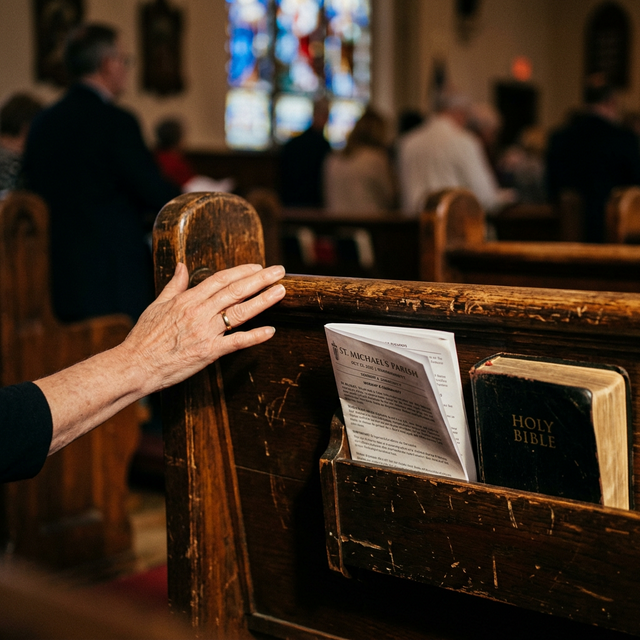
The back rows are your friend. I know, I know — the back rows have a reputation. "Oh, the back-row people aren't serious about church." Please. The back-row people are the smartest people in the building. They can observe without being observed. They can leave without climbing over six people. And — crucially — back rows tend to be less "claimed" because regulars like to sit in their usual spots closer to the front or along the aisles.
Avoid aisle seats. This is counterintuitive, but aisle seats are prime real estate for regulars. They want easy exit access, they want their arm on the armrest, they want to be able to do the side-hug greeting without standing up. Slide into the middle of a row and you're less likely to be in someone's specific spot.
Watch the flow. If you arrive a few minutes early, sit down, and then notice a pattern of regulars filing into the rows around you with the precision of a marching band, you might be in the "regulars' zone." Don't panic. Just note it for next time. If someone gives you the look, a simple "Oh, am I in your spot?" with a friendly smile usually disarms the situation entirely. Most people will say "Oh no, you're fine!" — even if you are very much in their spot.
Check for "reserved" signs. Some churches actually do reserve rows — usually for the pastor's family, the worship team, or the elderly. Look for small signs on the pew ends or chairs. If there's a reserved sign, honor it. If there's no sign? You're good. Any open seat is fair game.
Don't overthink it. Here's the truth that nobody will tell you in the moment: if someone is genuinely upset that a visitor sat in "their" spot, that is a them problem, not a you problem. You showed up. You sat down. You did nothing wrong. And the God they're there to worship? He doesn't have a seating chart.
The Thing About Belonging
Here's what I can't stop thinking about: the whole reason church people get weird about "their" seat is because that seat represents something bigger — routine, comfort, belonging. That's the same pew where they sat when their kid got baptized, or when they cried during a hard season, or when they first felt like this place was home.
And I get that. I really do. People's attachment to their spot is actually kind of sweet — even when it comes out sideways at a stranger who doesn't know the unwritten rules.
But here's the thing: you're looking for that same feeling. The visitor sitting in someone else's spot is doing the exact same thing the regular did years ago — walking into a room full of strangers, sitting down, and hoping this might become home.
There's a verse in Romans — chapter 15, verse 7 — that says, "Accept one another, then, just as Christ accepted you, in order to bring praise to God." And I think when Paul wrote that, he didn't add an asterisk that said *unless they're sitting in your spot.
The best churches I've visited are the ones where someone noticed I was new, sat down next to me, and said, "Hey, first time? You picked a great seat." That one sentence — you picked a great seat — communicated more warmth and belonging than an entire welcome committee.
Your One Thing This Week
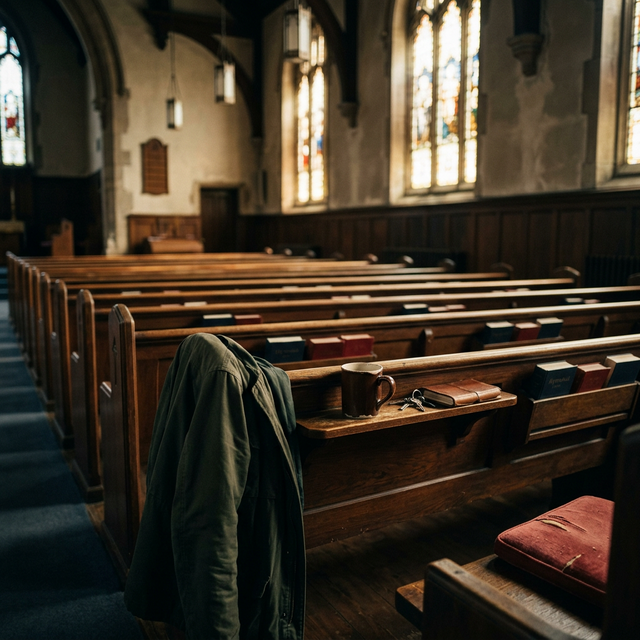
If you're church shopping, here's your assignment: sit somewhere different than you normally would. If you always gravitate to the back, try the middle. If you always take the aisle, try the interior. Notice what it feels like to be slightly outside your comfort zone — because that's what every visitor is feeling, every single Sunday.
And if you're a regular and someone is sitting in your spot this week? Good. Go sit somewhere else. Smile at them on the way. Maybe even introduce yourself.
Because the thing about your spot? It was never really yours. It was always just a seat — and the person sitting in it might be looking for the same thing you found there.
You sat down. That's brave. That seat is yours now.