The Pattern That Refuses to Be Forgotten
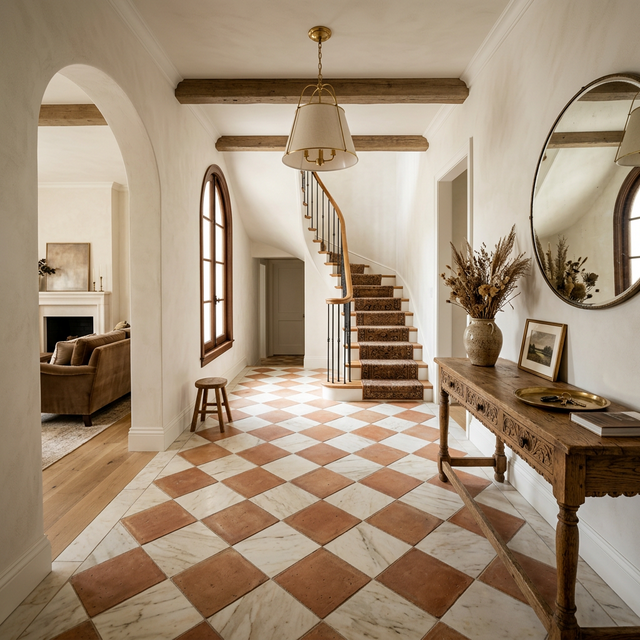
I was scrolling through a designer's project in Lisbon last week — a converted convent turned boutique hotel — and there it was. Not some trendy new material or a futuristic finish. It was a checkerboard floor. Honed Estremoz marble alternating with hand-cut terracotta, each tile slightly irregular, the grout lines imperfect, the whole thing radiating a warmth that made me want to lie face-down on it and weep.
And I thought: How is this pattern still here?
The checkerboard has survived the Renaissance, Versailles, Victorian foyers, mid-century diners, and your grandmother's linoleum kitchen. It has been declared dead by every minimalist movement of the last century, and it keeps coming back — not as nostalgia, but as revelation.
In 2026, the checkerboard is back again. But this time, it's different. It's warmer. It's earthier. It's traded its stark black-and-white uniform for something far more interesting: the colors of the ground itself.
The Glow-Up: From Diner Floor to Design Statement
Let me be specific, because Grace Montgomery does not do vague.
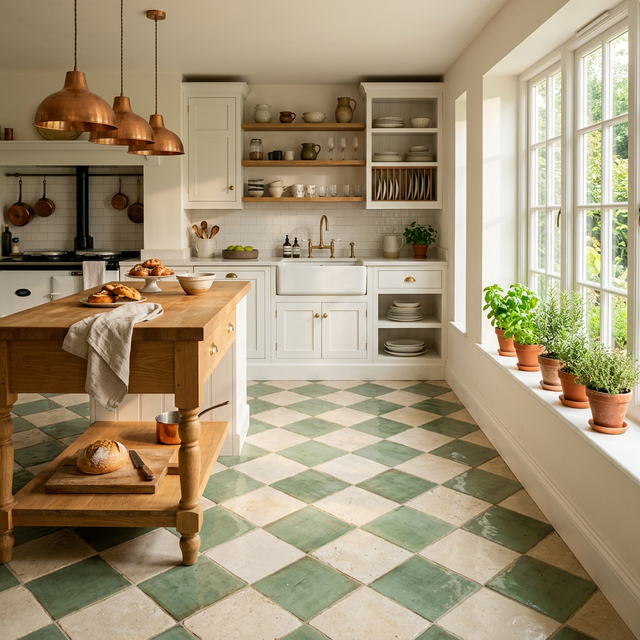
The new checkerboard isn't your grandmother's VCT tile. Designers are laying honed Calacatta marble against hand-fired terracotta from Salernes in Provence. They're pairing sage-glazed zellige with creamy Crema Marfil limestone. They're running oxblood encaustic cement tiles beside warm travertine in kitchens that look like they belong in a Tuscan villa reimagined by someone who actually reads Architectural Digest.
The palette has shifted dramatically. Forget black and white. The 2026 checkerboard speaks in terracotta and cream, sage and stone, burgundy and blush, olive and oat. Apartment Therapy noted the trend moving toward "softer, more muted palettes and interesting textures," and Houzz's annual study flagged honed marble and terracotta checkerboards as a top flooring choice for renovated kitchens and entryways.
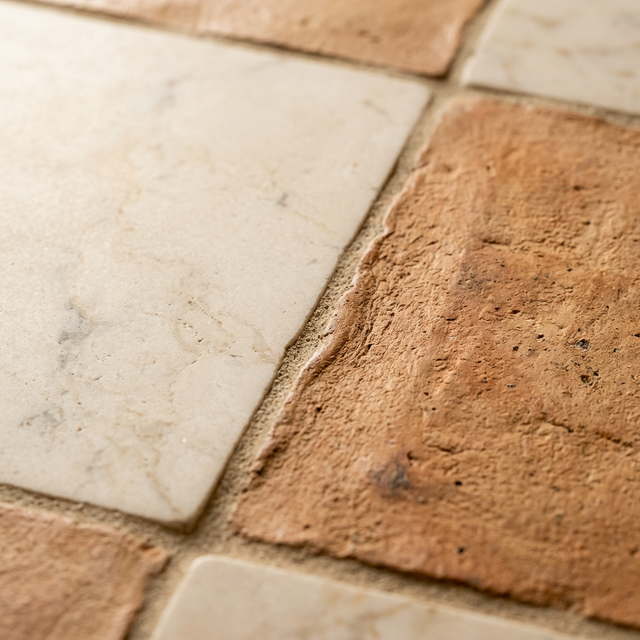
And here's the thing that makes my heart sing: these tiles are imperfect. The honed marble has a matte, almost chalky softness. The terracotta has tonal variation — each tile a slightly different shade of earth, because it is earth. The zellige has that characteristic undulation, each handmade piece catching light at a different angle.
This isn't a pattern. It's a conversation between materials.
Why the Checkerboard Endures: A Brief History of Holy Floors
Here's something most design blogs won't tell you: the checkerboard pattern has deep spiritual roots.
The earliest known decorative checkered floors appear in Roman mosaics, where the alternating pattern symbolized the duality of existence — light and shadow, order and chaos, the seen and unseen. When the pattern migrated into medieval cathedrals across Europe, it wasn't merely decorative. The checkered floor of a cathedral represented the playing field of the soul — a visual reminder that life is a game between light and darkness, and that every step matters.
The Cathedral of Siena has one of the most famous checkered marble floors in the world, laid in the 14th century. Walk across it and you're walking across eight hundred years of theology compressed into geometry. The marble itself was quarried from the hills of Tuscany — the same earth that fed the vineyards, the same stone that built the city walls.
When Louis XIV laid the iconic black and white marble checkerboard in the Hall of Mirrors at Versailles, he wasn't just making a style choice. He was making a power statement — the king's floor was the board, and everyone in the room was a piece on it.
The Victorians democratized it. The mid-century diner vulcanized it. The '90s laminated it into oblivion.
But the bones of the pattern — this ancient argument between two opposing forces held in rhythmic tension — never went away. Because it can't. It's too true.
The Theology of Contrast
Here is where Grace pivots, and here is where you should lean in.
We live in a culture that is deeply uncomfortable with contrast. We want everything blended, smooth, neutral. We paint our walls greige. We dress in monochrome. We curate our lives to eliminate visual friction — and then we wonder why our homes feel like waiting rooms.
The checkerboard is the antidote to that.
A checkerboard floor says: Two things can sit side by side without one canceling the other out. Light next to dark. Warmth next to cool. Soft marble next to rough terracotta. The contrast isn't conflict — it's composition.
And isn't that the gospel, frankly?
Scripture is full of sacred contrasts. "Weeping may endure for a night, but joy comes in the morning" (Psalm 30:5). Not joy instead of weeping. Joy next to it. The whole floor of the human experience is a checkerboard — sorrow and celebration, doubt and certainty, brokenness and beauty — and the pattern only works when both colors are present.
When you try to make a floor all one color, you know what you get? A slab. Functional, sure. But lifeless. The kind of floor you walk across without ever looking down.
The checkerboard demands that you look down. It demands that you notice the ground you're standing on. And theologically speaking, that's holy work — because the ground you're standing on is always holier than you think.
The Material Sermon: Marble and Earth
What makes the 2026 version of this trend so spiritually resonant is the specific material pairing.
Marble is refined. It starts as limestone, then undergoes metamorphosis — subjected to intense heat and pressure deep within the earth until its crystalline structure transforms into something luminous. Marble is stone that has been through something.
Terracotta is direct. The word literally means "baked earth" — terra cotta, from the Italian. It is clay, shaped by human hands and hardened by fire. No pretense, no metamorphosis, no veining. Just earth, heat, and honesty.
When you lay these two side by side in a checkerboard, you're creating a visual theology of humility and glory existing on the same plane. The marble doesn't look down on the terracotta. The terracotta doesn't resent the marble. They take turns. They share the load. They create something together that neither could accomplish alone.
"But we have this treasure in jars of clay" (2 Corinthians 4:7). The treasure and the clay. The marble and the terracotta. Side by side, forever.
How to Start: Your Checkerboard, Your Way
If you're ready to bring this ancient-modern trend into your home, here's how Grace would do it:
Start with the entryway. The foyer is where first impressions live, and a checkerboard floor in your entry says "This home has a point of view" before a single word is spoken. A 12×12 honed marble and terracotta checkerboard in a front hall is roughly $15-25 per square foot installed — a fraction of the cost of a full kitchen renovation, but it will change the entire energy of your home.
Choose your palette wisely. If your home leans warm and traditional, pair Tuscan terracotta with Crema Marfil marble. If you're drawn to something cooler and more contemporary, try sage zellige with honed white Thassos marble. For maximum drama, oxblood encaustic cement with warm travertine is staggeringly beautiful.
Embrace imperfection. The magic of the 2026 checkerboard is in the handmade quality. Seek out tiles with variation, texture, and character. Machine-perfect tiles will give you a diner. Handmade tiles will give you a cathedral.
Go diagonal. Laying the checkerboard at a 45-degree angle makes any room feel larger and adds dynamic movement. It also makes the pattern feel less rigid and more like a dance — which, let's be honest, is what a good floor should feel like.
Extend the theology. Don't stop at the floor. Carry the contrast principle into the rest of the room — rough linen curtains with polished brass hardware. Raw oak shelving against a smooth plaster wall. Let every surface in your home testify that beauty lives in the meeting of opposites.
Because the ground you walk on matters. It always has. And the bravest design choice you can make in 2026 is to look down at your feet and say: "Even here. Even this is holy ground."