

I need to confess something: I touched a stranger's wall last week.
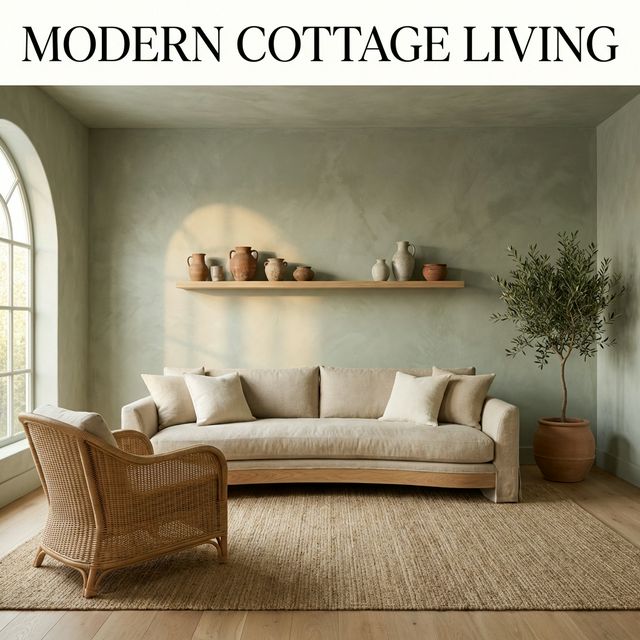
In my defense, it was a limewash wall — sage green, with the kind of chalky, clouded depth that makes you forget you're looking at a flat surface. It had tonal variation that shifted with the afternoon light, moving from silvered sage near the window to a deeper, mossy green in the corners, and I reached out and ran my fingertips across it before my brain could intervene with social norms.
The homeowner caught me. She understood completely.
The Finish That Breathes
If you've been paying attention to interiors this year, you've noticed that the walls are doing something different. They're not flat. They're not perfect. They look like they were applied by hand — because they were — and they have the kind of soft, mineral depth that makes every room feel like it's been gently exhaling for centuries.
Limewash is not new. It's been on the plaster of Italian villas and English churches for longer than any of us have been arguing about paint swatches. But in 2026, it's become the finish of choice for designers who are tired — and I mean bone-tired — of flat, synthetic, try-hard perfection. It's mineral-based. It's breathable. It ages like great literature. And in sage green? It looks like the walls of your home decided to become a garden.
The tonal variation is the thing. A single limewash wall will show you fifteen shades of the same color depending on where the light falls, how thick the application was, and what kind of morning the plasterer was having. Each wall is unrepeatable. Each surface is singular.
The Linen That Listens
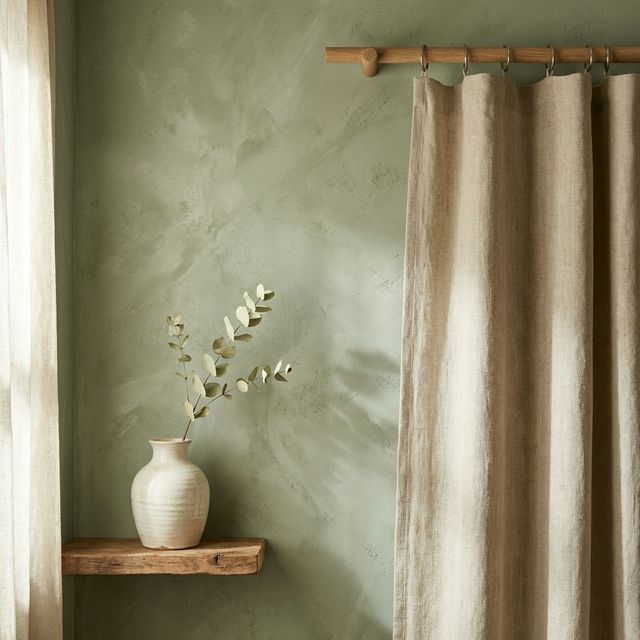
Against those chalky walls, something interesting happens to fabric. Specifically, to raw, undyed, natural linen — the kind that looks like it was harvested from a French field and hung in the sun to soften, because that's essentially what happened.
I'm not talking about the stiff, store-bought linen that wrinkles the moment you look at it and makes you feel like you've failed at domestic life. I'm talking about washed linen with a lived-in drape — curtain panels that pool slightly on light oak floors, slipcovers that show the shape of the cushion beneath, throws that look like they've been wrapped around someone's shoulders during a thousand good conversations.
Raw linen against limewash is one of the most quietly powerful combinations in interior design right now. The wall provides texture and depth. The linen provides softness and movement. Together, they create a room that feels like it's holding you rather than housing you.
And the color palette writes itself: the cool sage of the walls, the warm oat of the linen, a flash of terra cotta in a hand-thrown pot, the golden tone of white oak underfoot. It's nature's own mood board, and she has impeccable taste.
The Console Sermon
Now. Let me tell you about the Modern Cottage console vignette, because it's where this whole aesthetic delivers its closing argument.
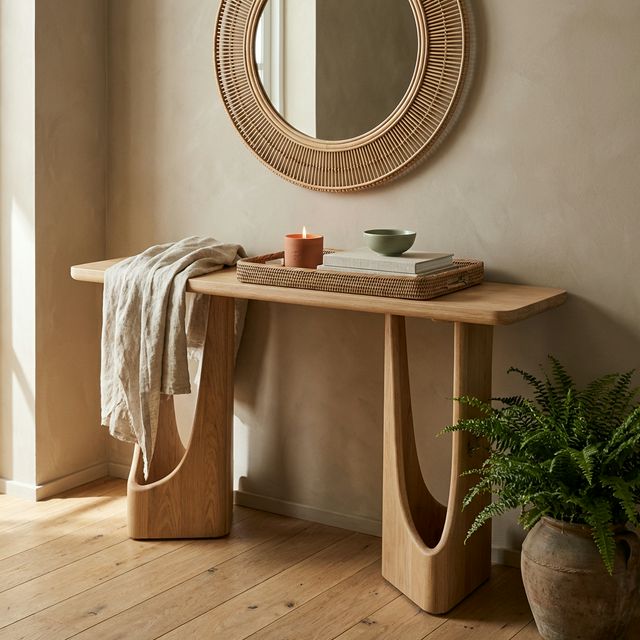
Picture a natural oak console table — not painted, not stained, just oak being oak — with organic curved legs that look like they grew rather than were manufactured. Against a warm taupe limewash wall, it practically glows. And on its surface: a woven rattan tray holding a terra cotta candle and a small ceramic bowl in sage green. A stack of linen-covered books. A raw linen throw draped casually over one end, pooling toward the floor like a whispered afterthought.
Above it, a round rattan mirror — woven, imperfect, casting latticed shadows when the sun hits it. Beside it, a potted fern in a weathered clay pot, because the Modern Cottage living room is not complete until there's at least one plant that looks like it's been living its best life since before you moved in.
It's not a designed scene. It's a discovered one. And that distinction is everything.
The Grace in the Grain
Here's what I keep coming back to — because I always come back somewhere, and this time it's to the wall.
We live in a culture that worships the smooth finish. The perfect surface. The flawless feed. We sand and prime and apply three coats until every wall in our homes looks like it rolled off a factory line — uniform, blemish-free, and absolutely soulless. And then we wonder why the room doesn't feel like anything.
Limewash doesn't hide. It reveals. Every brush stroke is visible. Every variation in thickness tells a story. The wall shows you exactly what happened to it, and it's beautiful because of the imperfection, not in spite of it.
"But he said to me, 'My grace is sufficient for you, for my power is made perfect in weakness.'" — 2 Corinthians 12:9
I think there's something profoundly true in a wall that doesn't pretend to be perfect. It's a physical reminder that the most beautiful things in life — the real things — are textured. They have variation. They show their history. They are better for having been touched by imperfect hands.
That raw linen curtain that drapes unevenly? That's not a flaw. That's character. That hand-thrown ceramic with the slightly uneven glaze? That's not a mistake. That's a fingerprint. That limewash wall with fifteen shades of sage depending on where you stand? That's not inconsistency. That's depth.
Grace — the real kind, not the Instagrammable kind — doesn't require a perfect surface. It works best on the rough ones. It seeps into the cracks and the variations and the places where the application was uneven, and it turns them into something that makes people reach out and touch it before their brain can intervene.
Make your home a place that doesn't pretend. Let the walls breathe. Let the linen wrinkle. Let the oak show its grain. You were never meant to be a flat finish. You were meant to be limewash — layered, textured, unrepeatable, and more beautiful for every imperfect stroke.
Grace Montgomery is the curator of Living Sanctuary, where high design meets higher truth. She believes every wall deserves depth, every room deserves honesty, and every soul deserves the freedom to stop pretending it was factory-made.