

The Death of the Contractor-Grade Pull
There was a decade—let’s call it the 2010s—when we all agreed, silently and tragically, that cabinet hardware should look like a barcode. Flat, matte black, perfectly horizontal ribbons of metal screwed into sterile white shaker doors. It was highly efficient. It was profoundly boring.
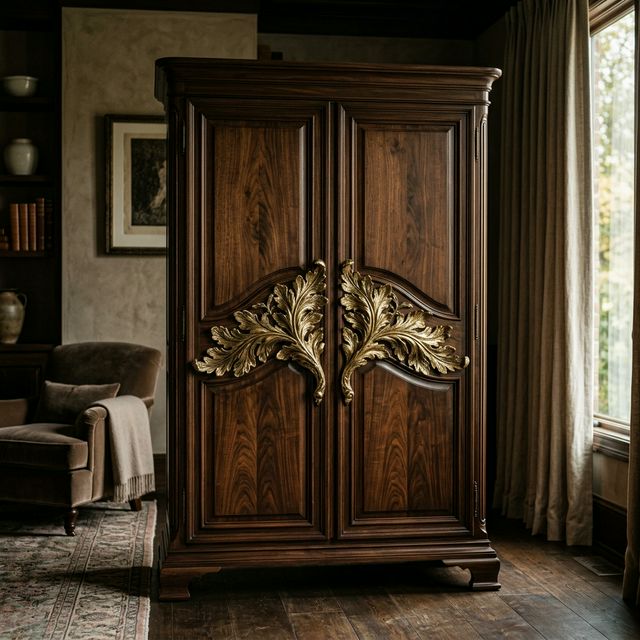
I recently walked into a newly renovated Tudor home in the Palisades, bracing myself for the inevitable parade of matte black bars. Instead, I grabbed the handle of a burled walnut armoire and felt the cool, heavy heft of cast bronze shaped like an unfurling ginkgo leaf. It didn’t look like hardware. It looked like an heirloom.
The designer caught my expression. "We don’t do pulls anymore," she said, adjusting her glasses. "We do jewelry."
The "Brooched" Renaissance
Pinterest Predicts officially named it the "Brooched" trend for 2026, but the world's best designers have been quietly leading us here for months. We are no longer treating hardware as a functional afterthought. Hardware is now the main event.
This trend is about scale, artisanship, and unapologetic adornment. We are seeing oversized, hand-cast brass knobs that look like vintage Chanel earrings. We are seeing solid glass pulls with gold-leaf inclusions that catch the afternoon light. We are seeing cabinet doors adorned with asymmetrical, sculptural metalwork that requires two hands to open.
A chest of drawers is no longer just storage. It is a lady, and she is getting dressed.
The Elements of Adornment
If you want to bring this into your home, you must understand the difference between bold hardware and "brooched" hardware. It’s a fine line between fashion and a costume party.
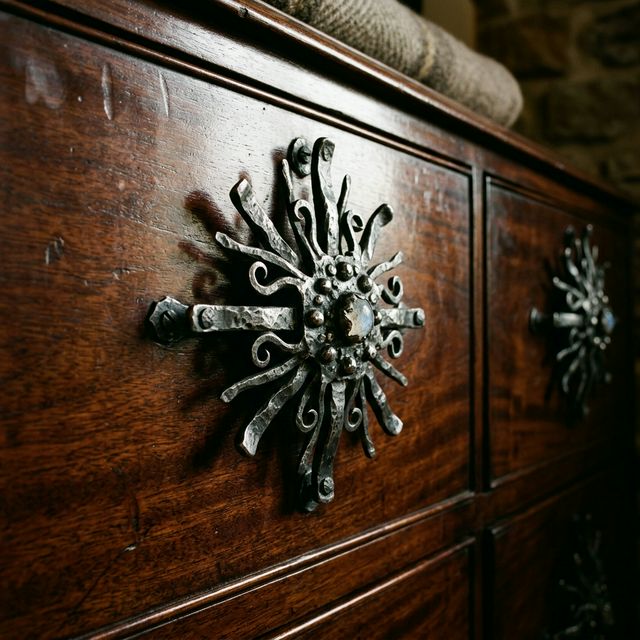
Scale is Everything. A brooch is not a stud earring. It demands attention. If you are replacing the knobs on a standard 36-inch dresser, don't look for a 1-inch diameter knob. Look for a 4-inch cast-stone sunburst. Let the hardware interrupt the negative space of the wood.
The Maker's Mark. The best pieces in this movement look entirely handmade. Reject anything that looks machine-extruded or perfectly symmetrical. You want unlacquered brass that shows the sand-casting marks. You want hammered silver that feels like it was forged over an anvil, not dropped out of an injection mold. The imperfection is the luxury.
The Unexpected Placement. Who said pulls have to be centered? In 2026, we are placing dramatic, jewelry-like hardware off-center, in the upper corners of armoires, or grouping them tightly together in the center of double doors to create a larger, unified crest.
The Pivot: The Value of the Detail
It’s tempting to dismiss hardware as frivolous. After all, a $2 plastic knob opens a drawer just as effectively as a $200 hand-cast bronze pull. If the function is identical, why obsess over the form?
Because God is in the details. And I don’t just mean the colloquialism; I mean the theology.
When God instructed Moses on the building of the Tabernacle in Exodus, He didn't just give dimensions for the walls. He gave excruciatingly specific instructions regarding the clasps, the loops, the rings, and the bases. He detailed the intricate hammering of the gold lampstand. He cared about the pomegranates woven into the hem of the priest's robe.
He is the author of macro-beauty—the Grand Canyon, the Milky Way—but He is equally obsessed with the micro-beauty. The structure of a snowflake. The precise engineering of a hummingbird's wing. The "pearl of great price" (Matthew 13:46) is a testament to the idea that immense, overwhelming value can be found in the smallest, most deliberate things.
When we choose beautiful, artisanal hardware for our homes, we are pushing back against a culture of disposable mass production. We are saying, "The small things matter. The things I touch every day shape my soul. I refuse to be surrounded by the thoughtless and the generic."
The Rooms That Ask You to Linger
Think about the physical act of opening a drawer. You do it dozens of times a day. You reach out, your skin makes contact with cold metal, you pull, you retrieve.
When that metal is a flat, contractor-grade bar, the action is utilitarian. You feel nothing. But when that metal is a piece of art—when it has weight, texture, history, and deliberate beauty—the action becomes mindful. You notice your home. You are brought into the present moment.
That is the secret power of the Brooched trend. It forces you to pay attention. It turns a mindless routine into a brief, tactile interaction with beauty.
How to Start Your Collection
Raid the Antique Stores. The best "jewelry" for your furniture isn't always new. Scour architectural salvage yards and antique shops in your town. A set of heavy Victorian brass pulls can completely transform a modern, inexpensive dresser. This juxtaposition—old, ornate hardware on clean, modern lines—is deeply sophisticated.
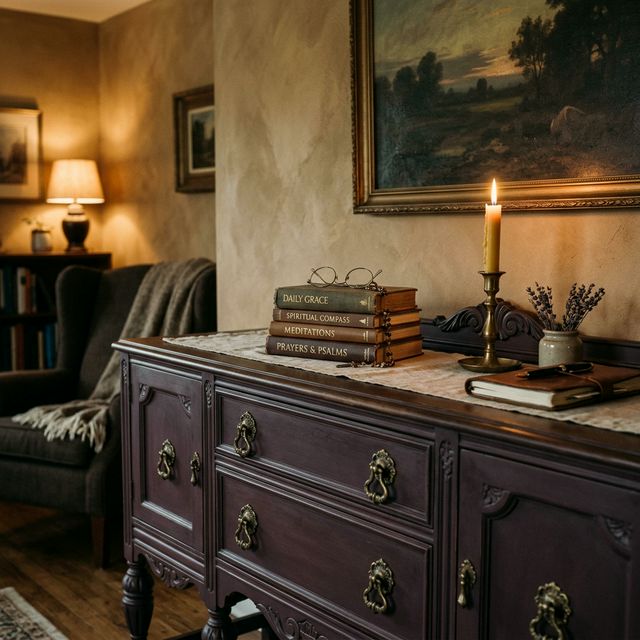
Focus on the High-Touch Areas. You don't need to replace every handle in your entire kitchen (a financially terrifying prospect). Start with a single, standalone piece. A vintage sideboard in the dining room. Your bedside table. A bathroom vanity. Choose the pieces you touch the most.
Mix Your Metals (Intentionally). If your room has predominantly warm wood and brass lighting, you don't have to use brass hardware. A heavy cast-silver or polished nickel "brooch" on a dark wood cabinet creates incredible tension and interest. Just ensure the finish feels authentic, not sprayed-on.
Let the Wood Sing. If you are investing in statement hardware, the furniture itself shouldn't fight for attention. The Brooched look is most effective on solid colors (deep lacquers or color-drenched rooms) or rich, unpainted historic woods like walnut, mahogany, or dark oak.
Your home is your sanctuary. Dress it accordingly.