

There's a particular kind of silence that settles over a room when the materials are right.
Not the silence of emptiness — Lord knows I've been in enough "minimalist" apartments that felt like they were cosplaying as hospital waiting rooms. No. I mean the silence of sufficiency. The silence of a room that has exactly what it needs and nothing it doesn't. A room that breathes.
The Modern Cottage movement has arrived, and it came in on bare feet.
The Limewash Awakening
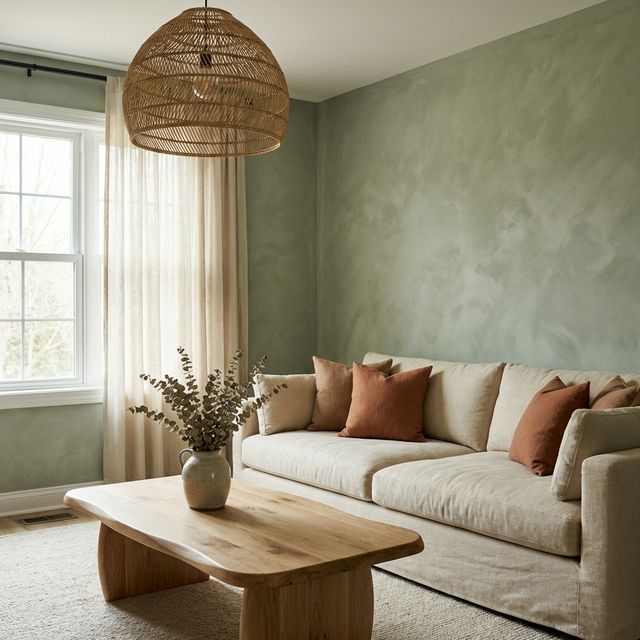
If you've been anywhere near a design feed this year, you've seen them: walls that look like they were kissed by morning fog. Limewash — that ancient, chalky, gloriously imperfect finish — has become the quiet revolution in a world that spent the last decade worshipping high-gloss everything.
And not just any limewash. We're talking sage green limewash that shifts from eucalyptus to seafoam depending on whether the sun is rising or setting. Warm cream that holds the memory of light long after the curtains close. Terra cotta washes that make your walls feel like Tuscan plaster without requiring a passport or a second mortgage.
The beauty is in the movement. Unlike flat paint, which lies there like a teenager who's been asked to do chores, limewash participates. It catches light differently in every corner. It ages. It develops character. It's a wall with a personality, and I am here for it.
The Linen Doctrine
Let's talk about linen, because linen deserves to be talked about with the same reverence we reserve for good bread and old hymns.
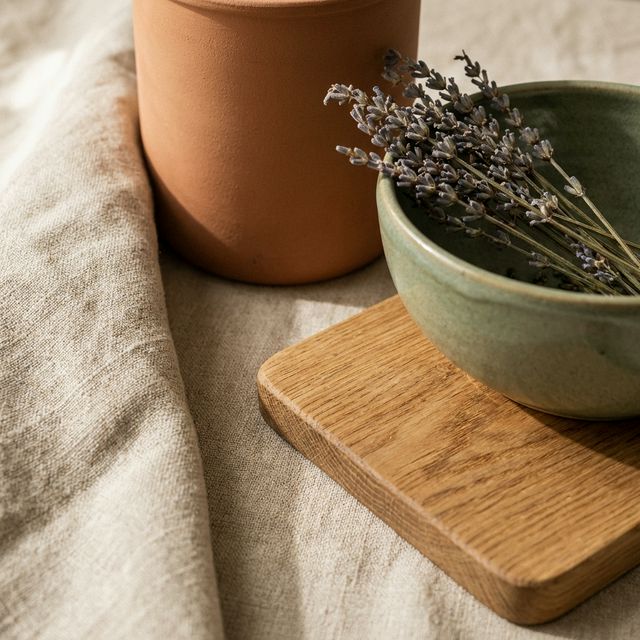
Raw linen curtains that filter morning light into something that feels like grace. Slipcovers that wrinkle on purpose — on purpose, because the wrinkle is the point. The wrinkle says: someone lives here. Someone sat in this chair and read and thought and maybe cried a little, and the fabric remembers.
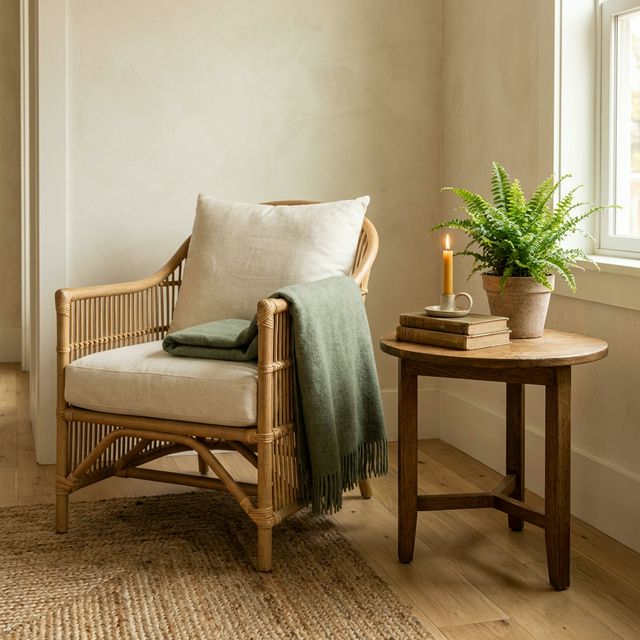
Pair that with woven rattan — a pendant light shaped like a basket your grandmother might've carried to market, or an armchair with spindles that catch the afternoon light in thin golden stripes — and you've created a room that feels like it was grown, not assembled.
The Quiet Revolution
But here's what strikes me most about this movement: its restraint.
In a world that screams — louder colors, bolder patterns, more maximalism, more drama — the Modern Cottage whispers. An oak coffee table with organic curves. A single ceramic vase with dried eucalyptus. A jute rug that grounds the space the way a deep breath grounds a conversation.
There's a courage in that, isn't there? The courage to believe that enough is enough. That you don't need to fill every shelf, cover every surface, crowd every corner. That a room — like a life — can be both minimal and deeply rich at the same time.
The Still Small Voice
And that's the thing that keeps catching me about these spaces.
They remind me of Elijah — exhausted, overwhelmed, hiding in a cave after giving everything he had. God didn't come to him in the earthquake. Not in the fire. Not in the wind that shattered rocks. He came in the still small voice. A whisper.
"After the earthquake came a fire, but the Lord was not in the fire. And after the fire came a gentle whisper." — 1 Kings 19:12
I think our homes are teaching us something the world keeps trying to make us forget: the most powerful things are often the quietest. The most beautiful rooms don't demand your attention — they earn it. Through texture you have to touch to appreciate. Through color that shifts with the hour. Through materials that carry the fingerprints of the hands that shaped them.
The sage green limewash doesn't shout. The linen doesn't perform. The rattan doesn't compete. They simply are — present, honest, breathing.
And maybe that's the invitation. Not to be louder. Not to fill more space. But to be the kind of person — the kind of room — where someone walks in, takes a deep breath, and thinks: yes. I can rest here.
Grace Montgomery is the curator of Living Sanctuary, where high design meets higher truth. No sad beige allowed — but quiet sage? That's a different conversation entirely.