

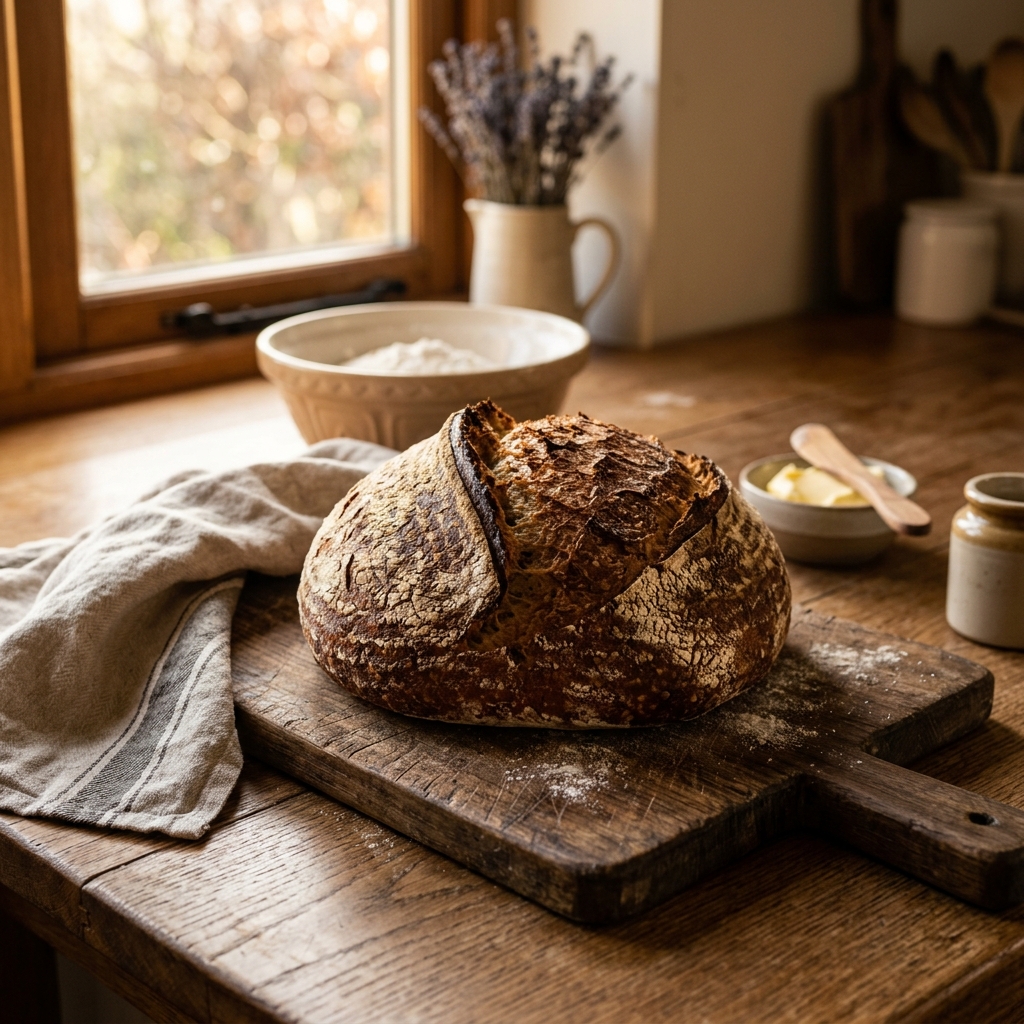
The Patience of the Grain
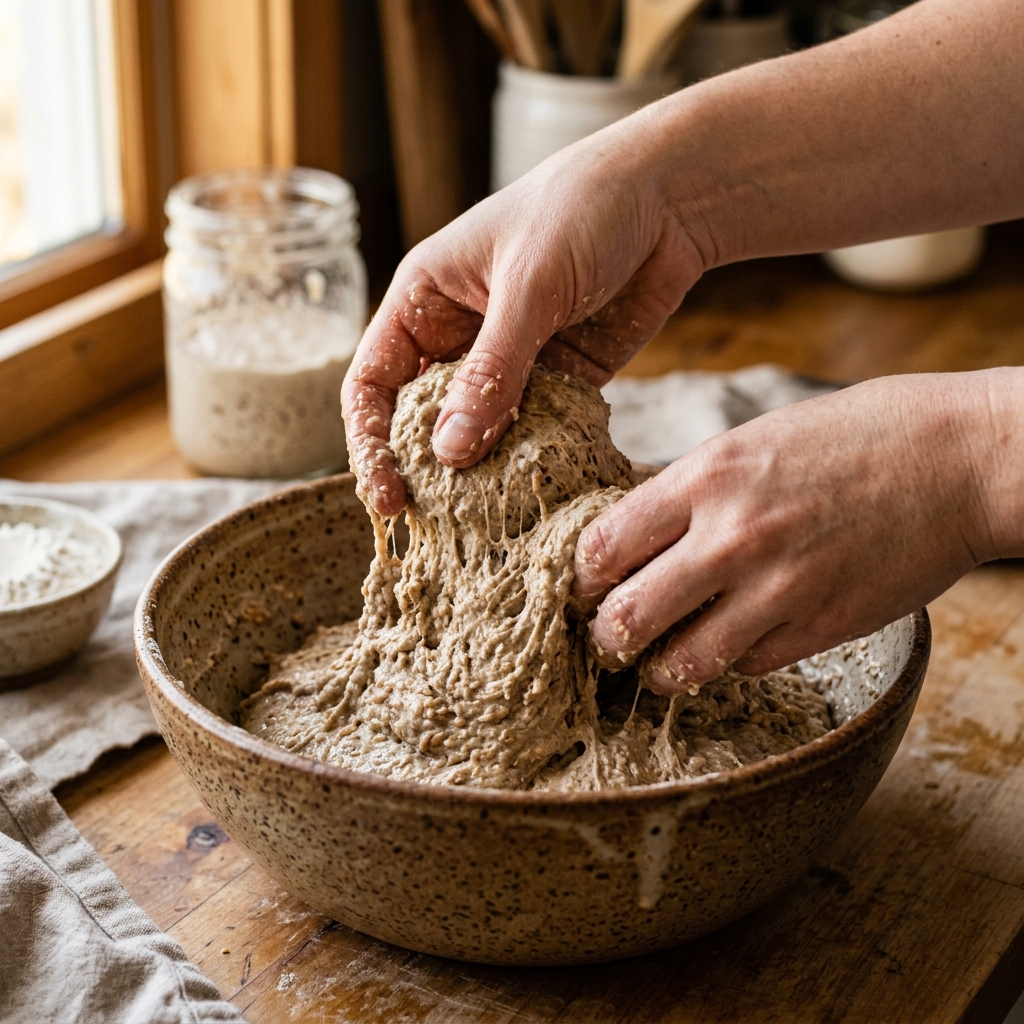
There is a specific kind of quiet that only happens in a kitchen when the bread is rising. It is not an empty silence, but a living one. If you listen closely, you can almost hear the slow, steady work of the wild yeast, transforming flour and water into something that sustains life. It’s a reminder that some of the best things in this world simply cannot be rushed.
History in Your Hands
When we bake with Einkorn, we are reaching back through the centuries. This is the oldest wheat, the grain that fed the families of the Old Testament. It is persistent, humble, and uncorrupted by modern interventions. Handling it feels less like a chore and more like a conversation with our ancestors. They knew what we often forget: that stewardship requires time, a light touch, and a deep respect for the natural rhythms God set in motion.
"Every moving thing that lives shall be food for you. And as I gave you the green plants, I give you everything." — Genesis 9:3
In our modern world, we are taught to value speed above all else. But the hearth tells a different story. It tells us that the wait is where the nourishment is found. Just as the dough must rest in the cool of the night to develop its depth and character, we too need seasons of stillness. We need those quiet, dark places where God does his most profound work in us, away from the noise and the hustle.
The Recipe
Ancestral Hearth Slow-Fermented Einkorn Sourdough
Prep: 30 min | Ferment: 12-24 hours | Bake: 45 min | Yield: 1 Loaf
Macros: Ancient Heritage Grains | Traditionally Fermented
Ingredients
500g Einkorn flour (whole grain preferred)
100g active wild yeast starter
350g warm filtered water (non-chlorinated)
10g fine sea salt
Instructions
1. Mix. In a large ceramic bowl, whisk the warm water and wild yeast starter until milk-colored. Add the Einkorn flour and salt. Mix by hand until a shaggy dough forms. Cover with a damp linen cloth and let rest for 45 minutes.
2. Stretch. Einkorn does not have the elastic strength of modern wheat. Perform four sets of 'coil folds' every 30 minutes. Wet your hands and gently lift the dough from the middle, letting it fold under itself. Be gentle; you are encouraging strength, not forcing it.
3. Bulk. Let the dough ferment at room temperature for 6-8 hours until it has grown by about 50%. It should feel airy and alive. Do not look for it to double like standard dough — Einkorn is heavier and more honest.
4. Cold Proof. Gently shape the dough into a round boule and place it in a floured proofing basket. Cover and refrigerate for 12-16 hours. This long, cold sleep is where the flavor deepens and the digestibility improves.
5. Fire. Preheat a Dutch oven in a 500°F oven for 1 hour. Turn the cold dough onto parchment, score with a sharp blade, and lower into the pot. Bake covered for 25 minutes, then uncovered at 450°F for another 15-20 minutes until the crust is deep and golden.
Around the Table
Fellowship Question: What 'slow transformations' have you witnessed in your life that were worth the wait?
Stewardship Tip: Save your Einkorn discard. It makes incredible crackers, pancakes, and pie crusts. In a stewardship kitchen, nothing of value is cast aside.
May this bread nourish more than just your body. May it feed your soul. — Hannah